Sewage Backup Cleanup in Selma
Sewage backup guidance for Selma — homes and businesses along the I-35 corridor. Whether it’s a house or a commercial restroom backing up, here’s how cleanup works: containment, extraction, sanitizing, drying, and getting the space back in service.
Do you handle sewage backups in Selma? Yes — Selma is one of the communities in this site's service area, covering both homes and commercial properties. This page explains the cleanup process — source identification, extraction, sanitation, drying, and restoration — with links to guidance for each step.
Local sewage cleanup information for Selma
Selma sits along the I-35 corridor between Schertz and San Antonio, mixing residential streets with commercial properties. For homeowners, the common scenarios are familiar — toilet overflows, floor-drain backups, and sewer-lateral problems. Commercial spaces face the same cleanup principles, but with more foot traffic, containing the affected area quickly matters even more after a backup.
In Selma, a backup might hit a home’s bathroom or a business’s restrooms and floor drains along the commercial corridor. The source could be a fixture, a lateral, or a blockage further down the main — but the response follows the same arc: stop the source, map how far the wastewater traveled, extract it, sanitize what it touched, and dry everything before repairs.
A backup pattern across Selma points past the private lateral: contact CCMA, the regional wastewater provider identified by the City of Schertz, alongside getting your home cleaned. Document your damage regardless — the indoor work does not wait for the utility’s findings.
Relevant service pages
From contamination to restoration
Source
Identify the likely wastewater source and whether it is still active.
Contain
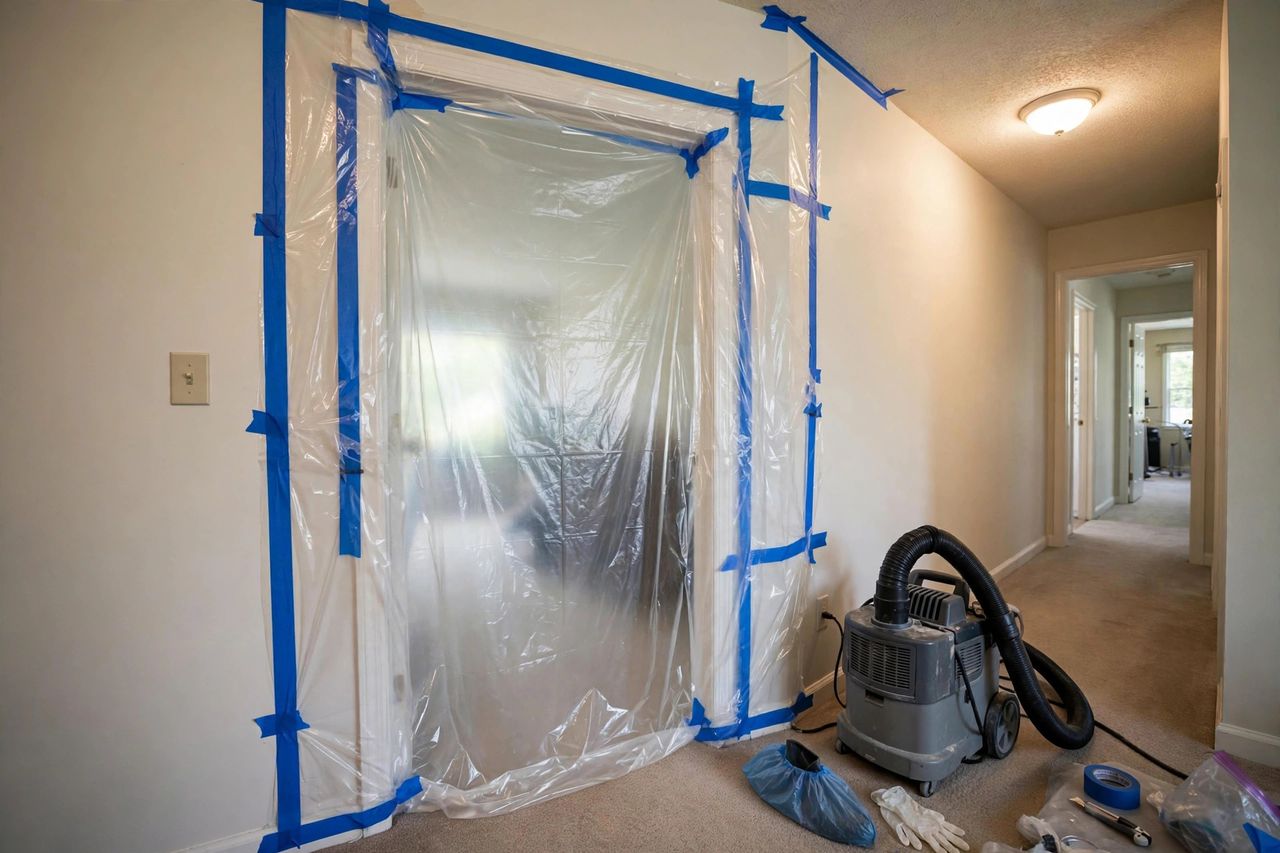
Keep unnecessary traffic and exposure out of the affected area.
Extract
Remove contaminated wastewater and affected materials where appropriate.
Clean
Physically clean surfaces and contents that can be retained.
Dry
Address remaining moisture and check hidden areas.
Restore
Address odor, microbial growth, repairs, or replacement needs.
What matters after a sewage event in Selma
Selma's mix of homes and I-35 commercial properties changes the practical details. In a commercial space, a backup in a restroom or floor drain can put a public-facing area out of service, so containment — keeping customers and staff out of the affected area — comes first after the source is stopped. In homes, the process follows the standard residential framework above. Either way, if the backup appears to come from beyond the property, contact the utility or city in parallel with cleanup.
In Selma, knowing where your lateral ends and the public main begins decides who to call when the blockage is not inside the house. A plumber can usually confirm which side of the boundary the blockage sits on.
Use the service pages linked above for step-by-step guidance on each part of the process — extraction, sanitation, drying, odor removal, and restoration — and return here whenever you need the Selma angle on any step.
Local cleanup checklist
- Confirm the backup has stopped before planning cleanup— an active source undoes cleaning.
- Limit movement through contaminated rooms— every footstep spreads it further.
- Map where the water went, including where it may have wicked so nothing gets missed.
- Treat carpet, drywall, and insulation differently from tile— hard surfaces can often be restored.
- Do not let dampness linger after the visible water is gone— secondary problems are preventable.
- Use the right resource — plumber, septic tech, or CCMA — for the source— then get the indoor contamination cleaned.
What the cleanup environment can involve
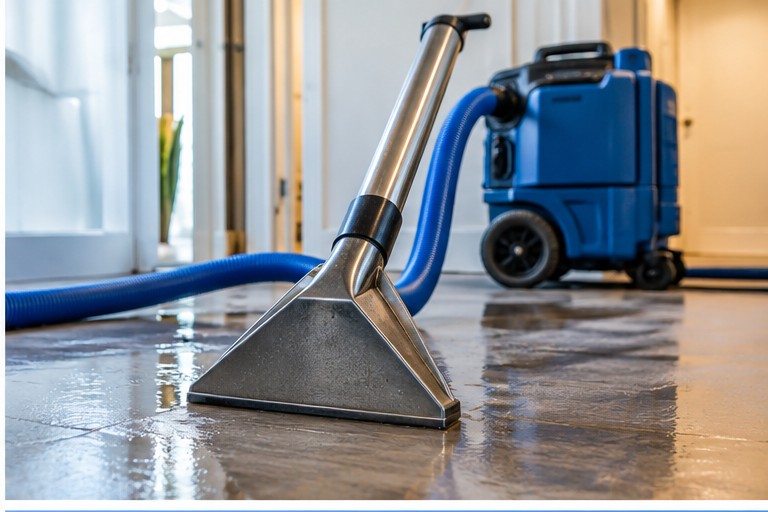
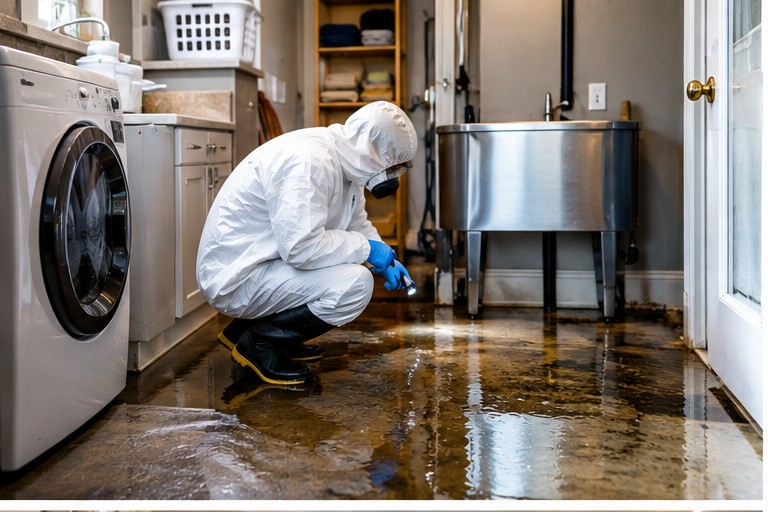
Photos are shown for illustration only, not as records of a specific job.
Need sewage cleanup information for Selma?
Use the direct phone CTA to discuss the event and identify the appropriate next step.