What is emergency sewage cleanup? Urgent sewage events are time-sensitive because wastewater can continue to spread, materials can remain saturated, and occupants may be exposed to contaminated water. The immediate goal is to control the area and stop unnecessary exposure while the source and cleanup pathway are evaluated.
How emergency sewage cleanup is approached
Urgent sewage events are time-sensitive because wastewater can continue to spread, materials can remain saturated, and occupants may be exposed to contaminated water. The immediate goal is to control the area and stop unnecessary exposure while the source and cleanup pathway are evaluated.
When sewage is still coming in, the priority order is simple: people first, then containment, then cleanup. Get everyone (and pets) away from the water, stop using any plumbing connected to the backup — no flushing, no laundry, no dishwasher — and shut the toilet supply valve if that's the source. Don't wade through it to save belongings; contaminated water isn't worth the risk. Once the area is isolated, extraction and assessment can begin.
Conditions that determine the cleanup scope
The scope is driven by whether the source is still active, how far wastewater has traveled, which materials it contacted, and whether moisture remains trapped in hidden areas. These factors determine whether the work is mainly containment and extraction, or whether it also requires material removal, sanitation, and drying.
Typical cleanup sequence
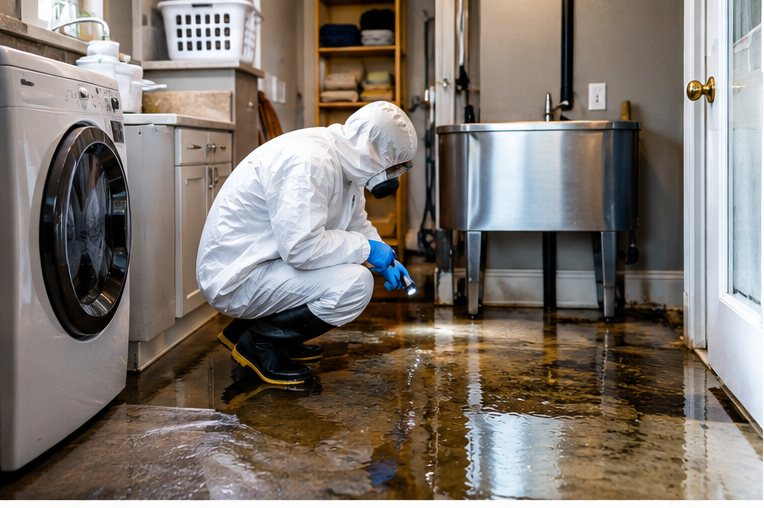
Assess the source and contamination path
Control the affected area and reduce unnecessary exposure
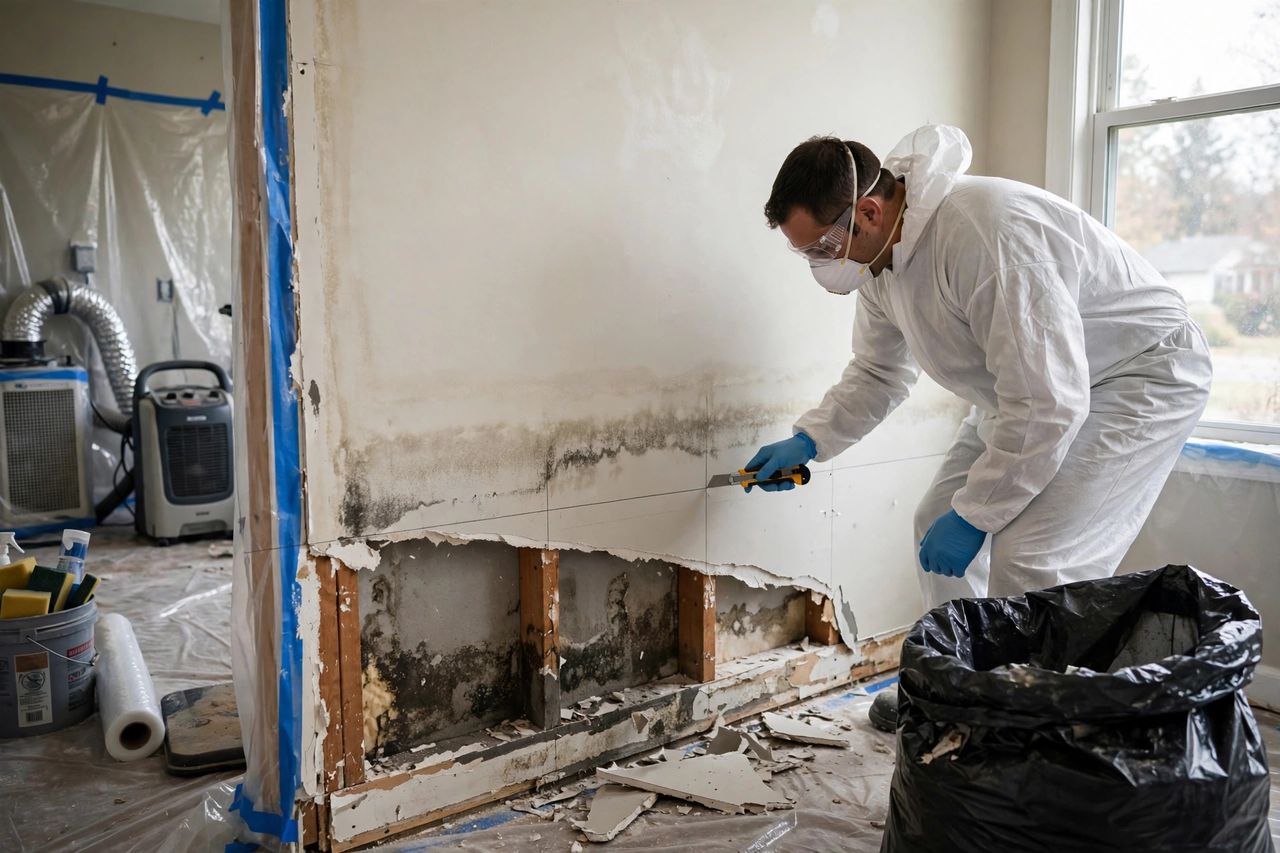
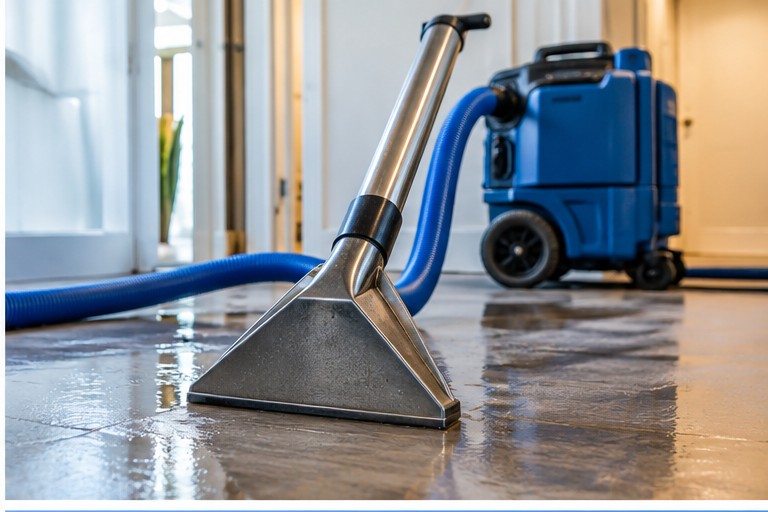
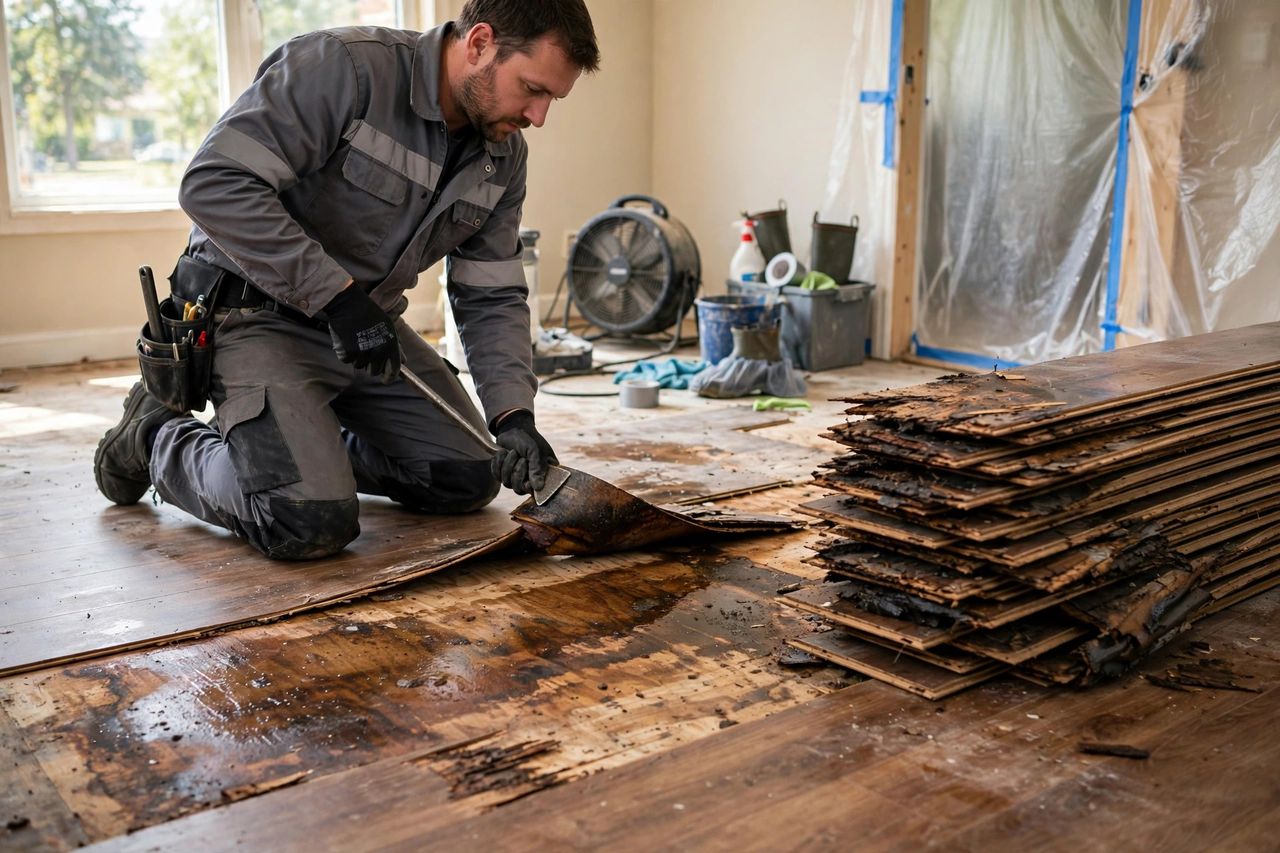
Remove wastewater and contaminated materials where appropriate
Physically clean affected surfaces and contents that can be retained
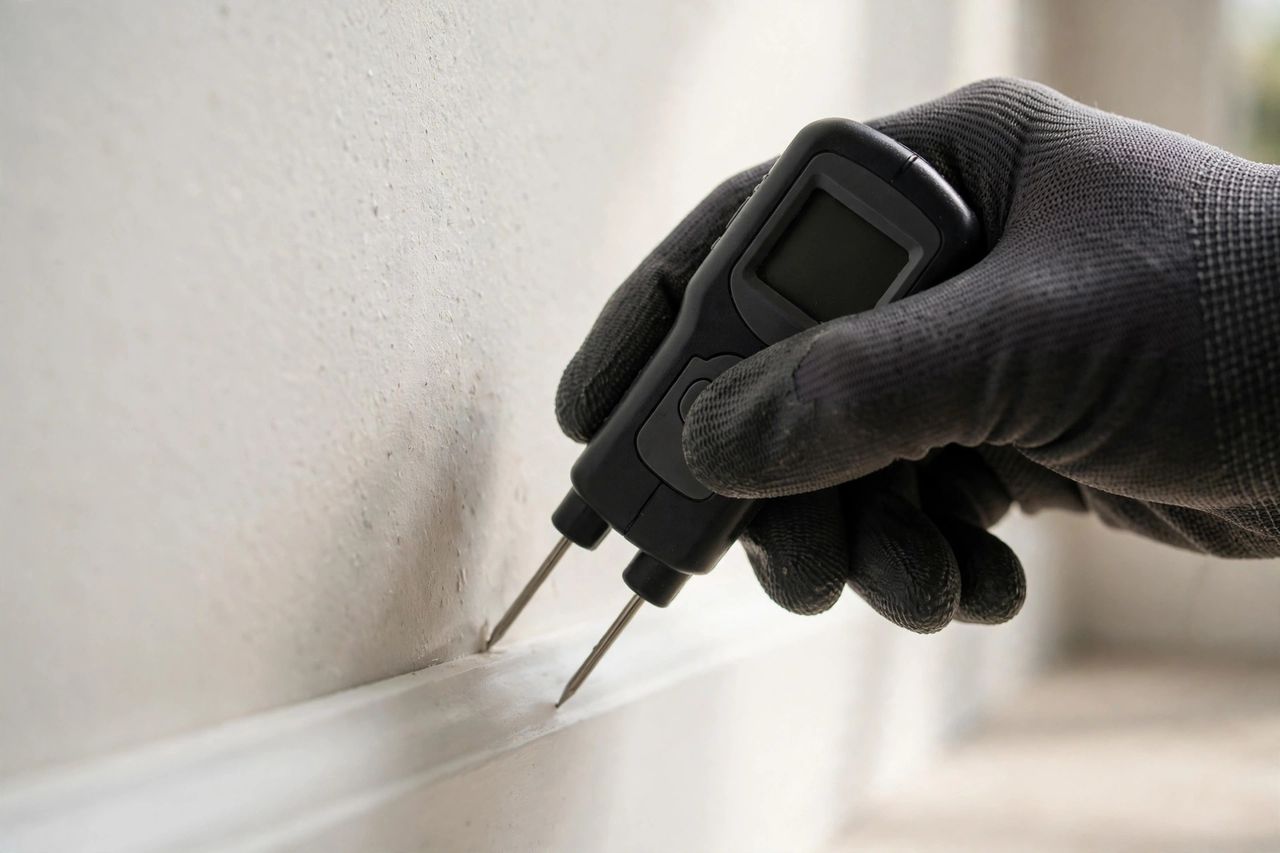
Dry and monitor affected areas for remaining moisture
Address odor, microbial growth, repairs, and restoration needs
Materials that may be affected
In an active backup, sewage goes wherever gravity takes it: bathroom floors and vanities first, then hallways, bedrooms, and living areas as it spreads. It seeps under baseboards, into carpet pad, behind toilets, and down floor drains into lower rooms. The faster it's contained, the shorter the list of ruined materials — which is why stopping the source and blocking the spread come before anything else.
What to do before cleanup
- Keep occupants and pets out until it is cleaned for everyone's safety.
- Keep DIY disinfectant experiments out of the work area— leave disinfection to the right products and dwell times.
- Keep the HVAC from pushing air through the work zone until extraction and cleaning are complete.
- Keep a visual record of the damage for reference as the job progresses.
- Confirm the fixture or line is no longer backing up before scheduling extraction and sanitizing.
What not to assume
After Emergency Sewage Cleanup, deodorizing is not the same as decontaminating — a room can smell fine and still harbor contamination in porous materials. Removal versus cleaning is a material-by-material decision, made against the contamination rather than against appearances.
Schertz context
Schertz's wastewater system is managed regionally — the City of Schertz identifies CCMA (Cibolo Creek Municipal Authority) as the wastewater provider. If sewage is backing up through multiple fixtures at once, or neighbors are seeing it too, the problem may be in the public sewer rather than your line, and the utility should be notified alongside your cleanup call.
Questions people ask about emergency sewage cleanup
What is emergency sewage cleanup?
Emergency sewage cleanup is an urgent response for active sewage backups, overflows, and contaminated-water events that cannot wait for a routine visit. It focuses on controlling the affected area, stopping unnecessary exposure, and evaluating the source so the full cleanup pathway can be planned. The exact scope depends on the source, how far the wastewater traveled, the materials contacted, and moisture conditions.
When is emergency sewage cleanup needed?
It is needed when sewage is actively entering a room, contaminated water is standing in living spaces, wastewater threatens electrical equipment, or the source cannot be stopped with ordinary household steps. If children, pets, or vulnerable occupants could contact the water, the event should be treated as urgent rather than routine.
Can the visible water be the whole problem?
Rarely. During an active event the visible water is only what can be seen right now — wastewater may be traveling under flooring, behind baseboards, into wall cavities, or into low areas while you wait. That hidden spread is a key reason urgent events are assessed by the contamination path, not just the visible waterline.
What should happen before deodorizing?
Control the source, remove wastewater and residues, clean and address affected materials, and deal with remaining moisture first. Deodorizing before those steps only masks the odor while contamination remains. Odor work is most effective once the underlying source is controlled.
What if the backup appears to be a public sewer problem?
Treat cleanup and utility diagnosis as separate but related tasks. If sewage is entering from a line that serves more than one property, contact the appropriate municipal or utility authority — the City of Schertz identifies CCMA as the regional wastewater provider — while also addressing the contamination inside the property.