What is sewage odor removal? Persistent sewage odor usually means the source of the odor has not been fully addressed. Odor can be associated with residues, porous materials, hidden moisture, contaminated contents, or microbial activity. Effective odor work starts with source control.
How sewage odor removal is approached
Persistent sewage odor usually means the source of the odor has not been fully addressed. Odor can be associated with residues, porous materials, hidden moisture, contaminated contents, or microbial activity. Effective odor work starts with source control.
Sewage odor has a source, always. It might be residue dried into grout lines, sewage trapped under a toilet base or behind a vanity, moisture still sitting in a wall cavity, a floor drain with a dried-out trap, or a vent stack problem letting sewer gas in. Air fresheners and fogging over the top of an unresolved source just perfumes the problem temporarily. Real odor removal is detective work: moisture readings, a nose for the strongest concentration, and checking the places nobody looks — then eliminating what's actually causing it.
Conditions that determine the cleanup scope
The scope is driven by identifying the actual odor source — residues, porous materials holding contamination, hidden moisture, or microbial activity — rather than by the smell's intensity. Until the source is found and controlled, the work is investigation; once it is controlled, deodorizing becomes the finishing step.
Typical cleanup sequence
Assess the source and contamination path
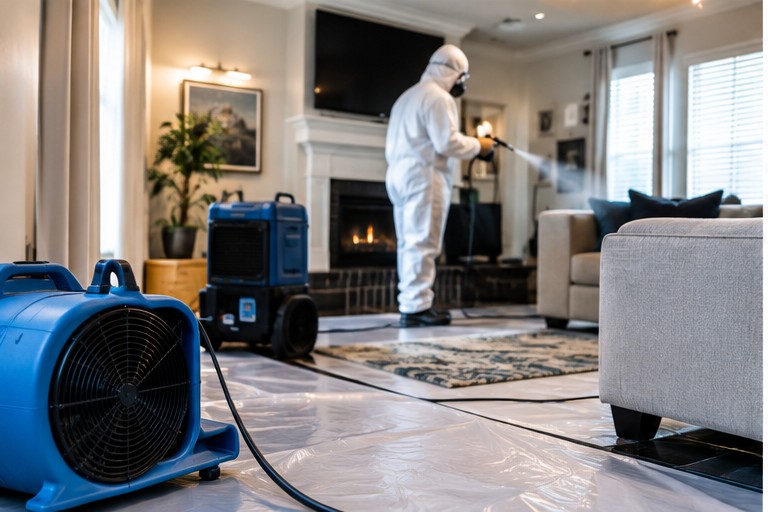
Control the affected area and reduce unnecessary exposure
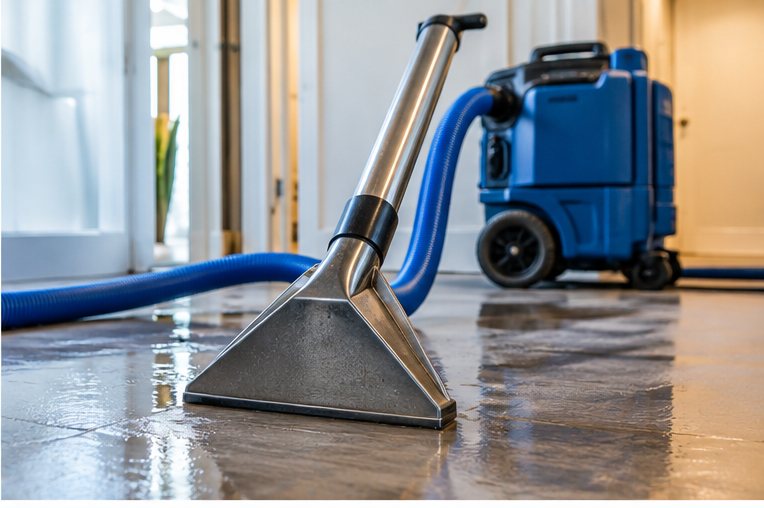
Remove wastewater and contaminated materials where appropriate
Physically clean affected surfaces and contents that can be retained
Dry and monitor affected areas for remaining moisture
Address odor, microbial growth, repairs, and restoration needs
Materials that may be affected
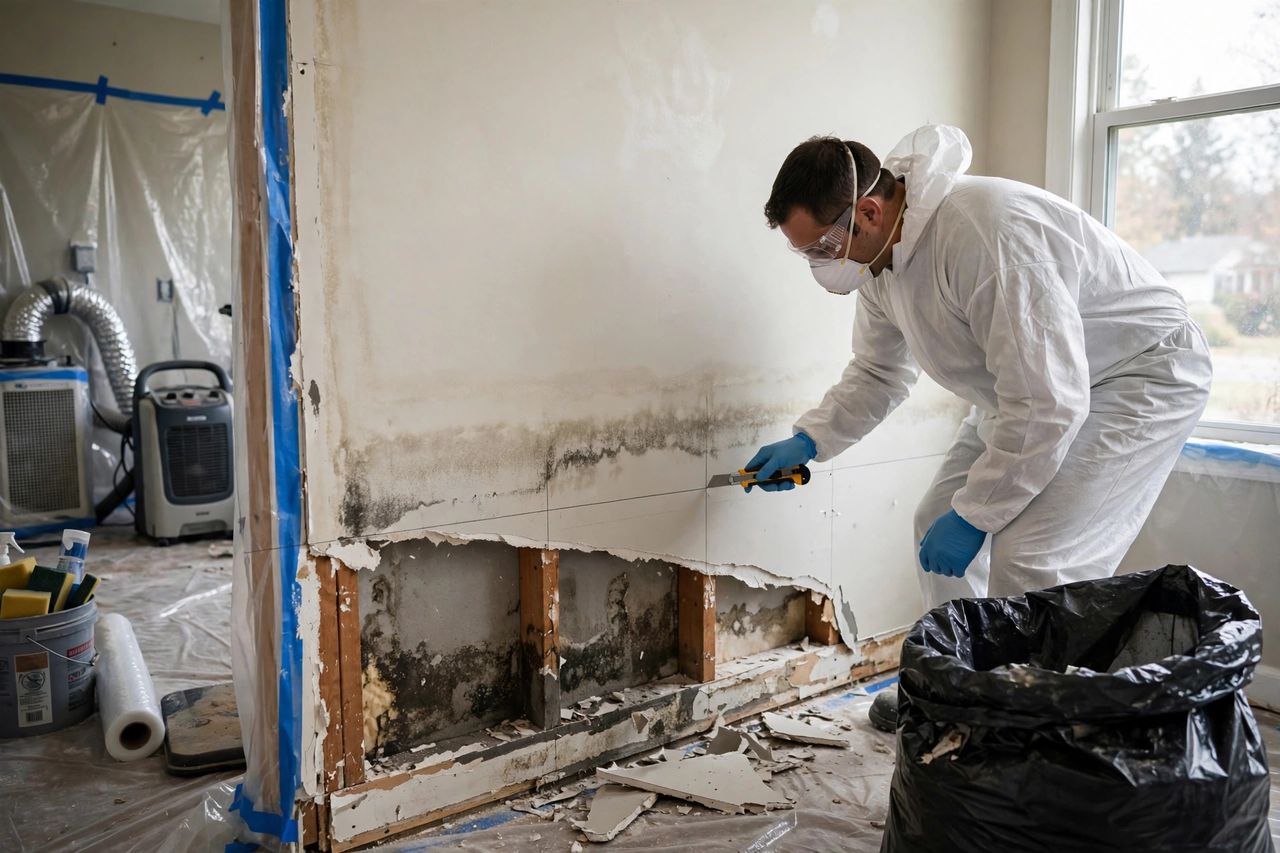
Odor lives in materials: dried sewage residue in tile grout and concrete pores, contaminated drywall and insulation, saturated carpet pad, the wax ring cavity under a toilet, and drain traps that have gone dry. Porous materials holding odor usually need removal — you can't deodorize sewage out of carpet pad. Hard surfaces can be cleaned and treated once the residue is physically gone.
What to do before cleanup
- Do not allow traffic through contaminated rooms during Sewage Odor Removal work.
- Do not assume a stronger chemical mix means a safer result— mixing products can create toxic gases.
- Do not try to dry the area with fans before it is cleaned— airborne droplets carry contamination to clean rooms.
- Capture dated photos of each impacted space— it helps scope the Sewage Odor Removal work.
- Verify the source is stopped before deep cleaning; a plumber, septic tech, or the utility may still be needed.
What not to assume
In Sewage Odor Removal work, the eye is the least reliable instrument: moisture meters and material assessment decide what is actually clean. The call on each material weighs contamination level, porosity, and whether it can truly be cleaned — not just how it looks.
Schertz context
Schertz's hot climate makes odor problems worse — heat accelerates bacterial activity and dries out infrequently used drain traps (guest bathrooms, floor drains) faster. The City of Schertz's wastewater page covers blockages and names CCMA as the regional provider; persistent neighborhood-wide odor can indicate a public-line issue worth reporting.
Questions people ask about sewage odor removal
What is sewage odor removal?
Sewage odor removal is the process of finding and eliminating the source of persistent sewage smell — not just masking it. Persistent odor usually means the source has not been fully addressed: residues, porous materials, hidden moisture, contaminated contents, or microbial activity. Effective odor work starts with source control and follows the same contamination path as the cleanup.
When is sewage odor removal needed?
It is needed when a sewage smell lingers after the visible cleanup, or when odor appears without an obvious event — for example from a dried-out trap, a venting issue, residues in drains, or hidden moisture from an old backup. If air fresheners or surface cleaning have not resolved it, the source is somewhere the cleaning did not reach.
Can the visible water be the whole problem?
For odor work, the visible water was never the whole problem — the smell comes from what is left behind or hidden. Odor sources are often residues in porous materials, moisture trapped in cavities, contaminated contents, or buildup in drains: things that produce smell long after standing water is gone.
What should happen before deodorizing?
This is the central rule of odor work: the contamination source, residues, affected materials, and moisture must be addressed before any deodorizing. Odor treatment works best when the underlying source is controlled — applying deodorizers first just layers fragrance over a source that keeps producing odor.
What if the backup appears to be a public sewer problem?
If the odor suggests an ongoing sewer or line problem rather than a past event, contact the appropriate municipal or utility authority in addition to the odor investigation. The City of Schertz identifies CCMA as the regional wastewater provider serving Schertz and nearby communities. Source diagnosis and odor treatment are separate tasks.