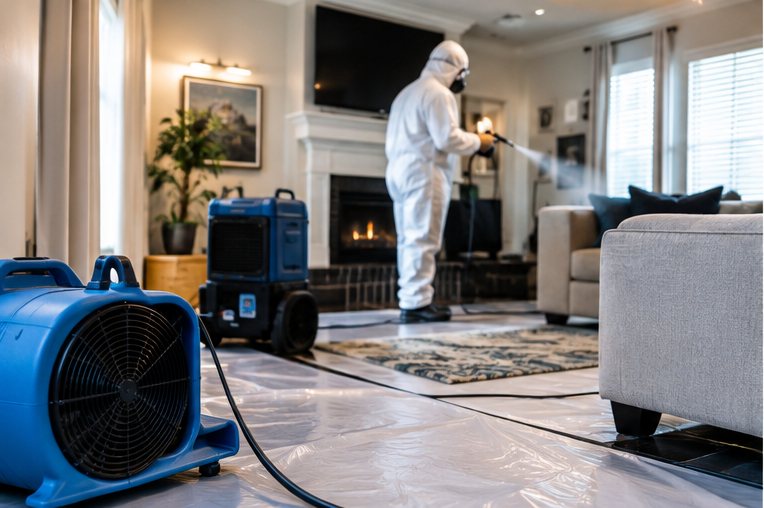
What is toilet overflow cleanup? Toilet overflow cleanup depends on what overflowed, how far it traveled, how long surfaces were wet, and whether the water contacted porous materials. A bathroom floor can look clean while contamination or moisture remains around edges, cabinets, baseboards, or subflooring.
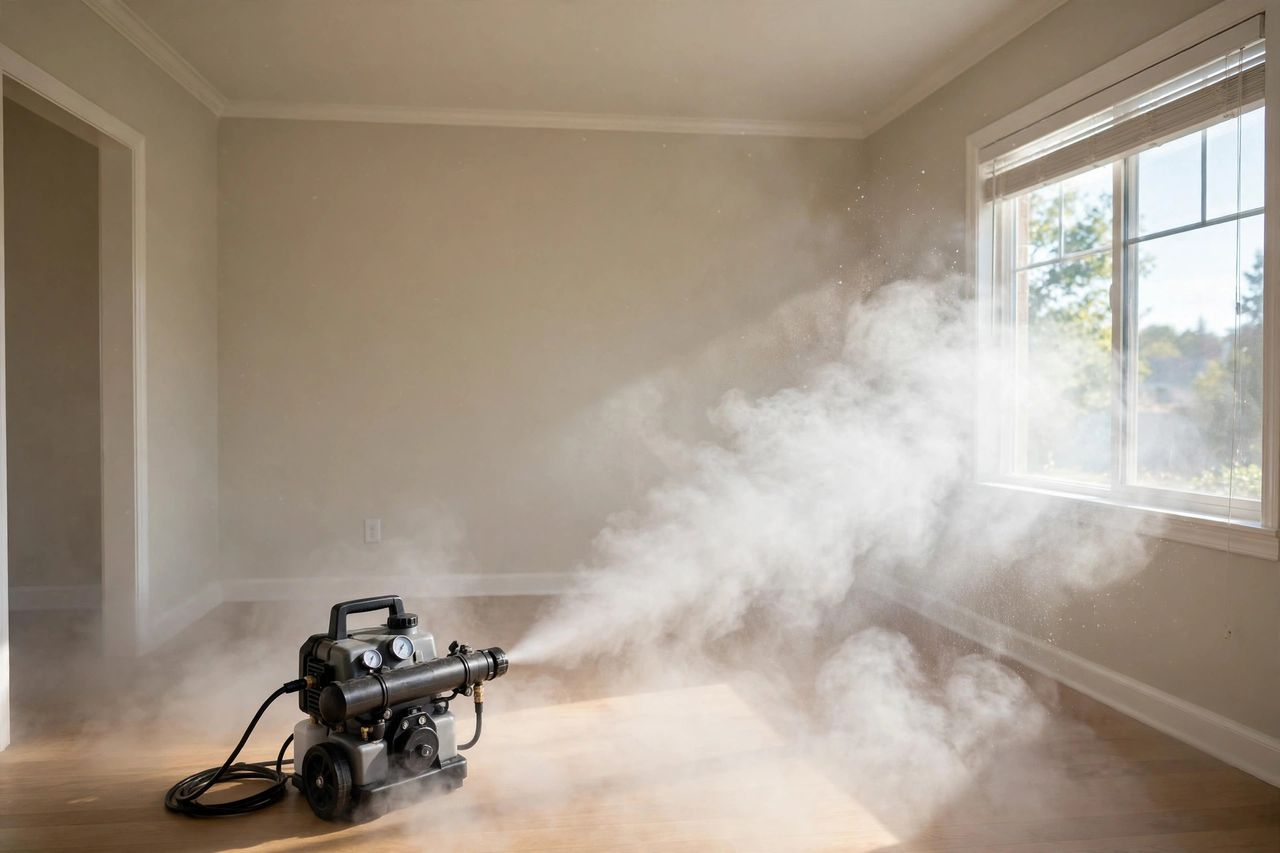
How toilet overflow cleanup is approached
Toilet overflow cleanup depends on what overflowed, how far it traveled, how long surfaces were wet, and whether the water contacted porous materials. A bathroom floor can look clean while contamination or moisture remains around edges, cabinets, baseboards, or subflooring.
Not all overflows are equal. A clean-water tank overflow is one thing; a bowl overflow carrying waste is sewage, full stop — and it doesn't stay in the bowl's footprint. Water runs under the toilet base, past a failed wax ring, into the subfloor, along grout lines, behind the vanity, and under baseboards. The shutoff valve behind the toilet stops the supply; then the real work is tracing where the water went, because bathroom floors are designed to look fine while hiding moisture underneath.
Conditions that determine the cleanup scope
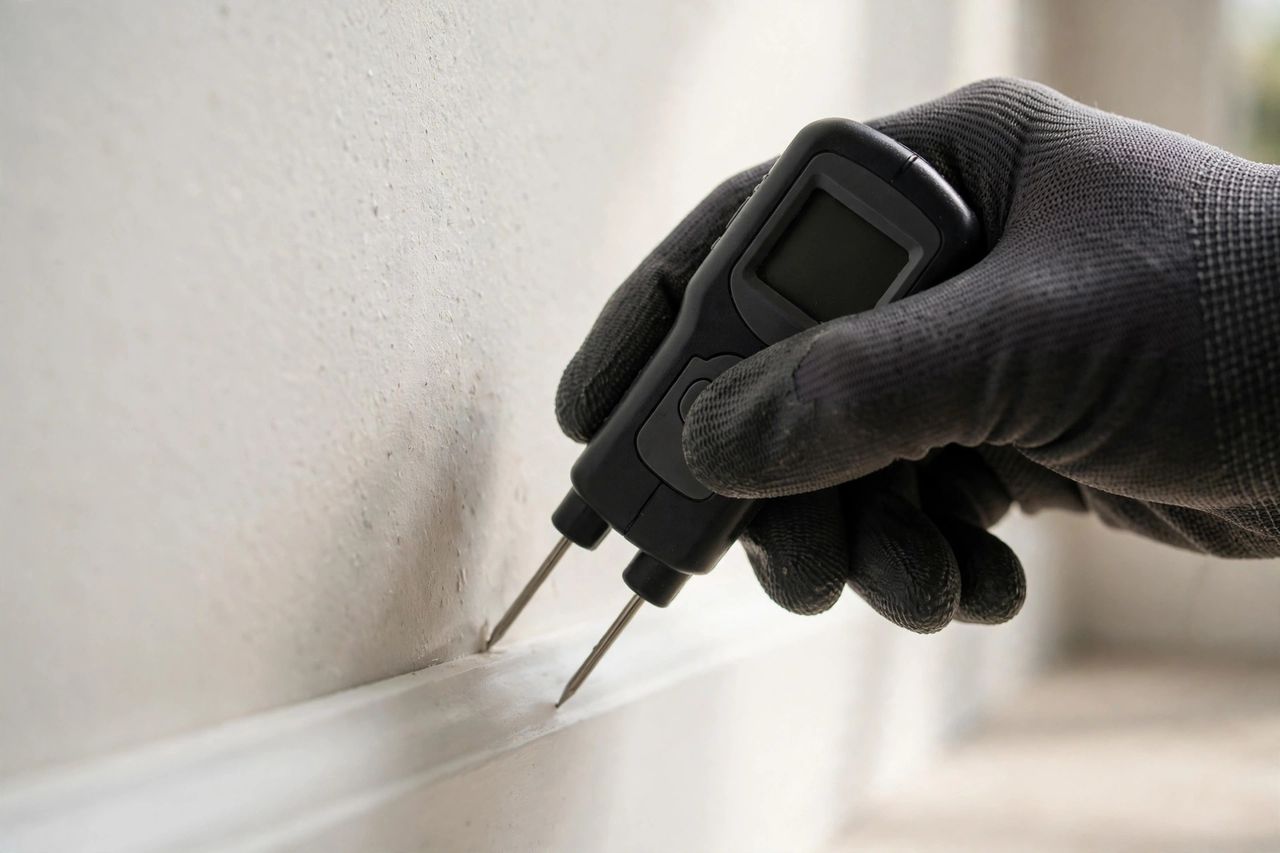
The scope is set by what overflowed, the volume, how far the water traveled, how long materials stayed wet, and whether it reached porous materials like subflooring, drywall, or cabinet bases. The bathroom's tight spaces and hidden gaps make the inspection — around the base, under fixtures, behind the toilet — as important as the visible floor.
Typical cleanup sequence
Assess the source and contamination path
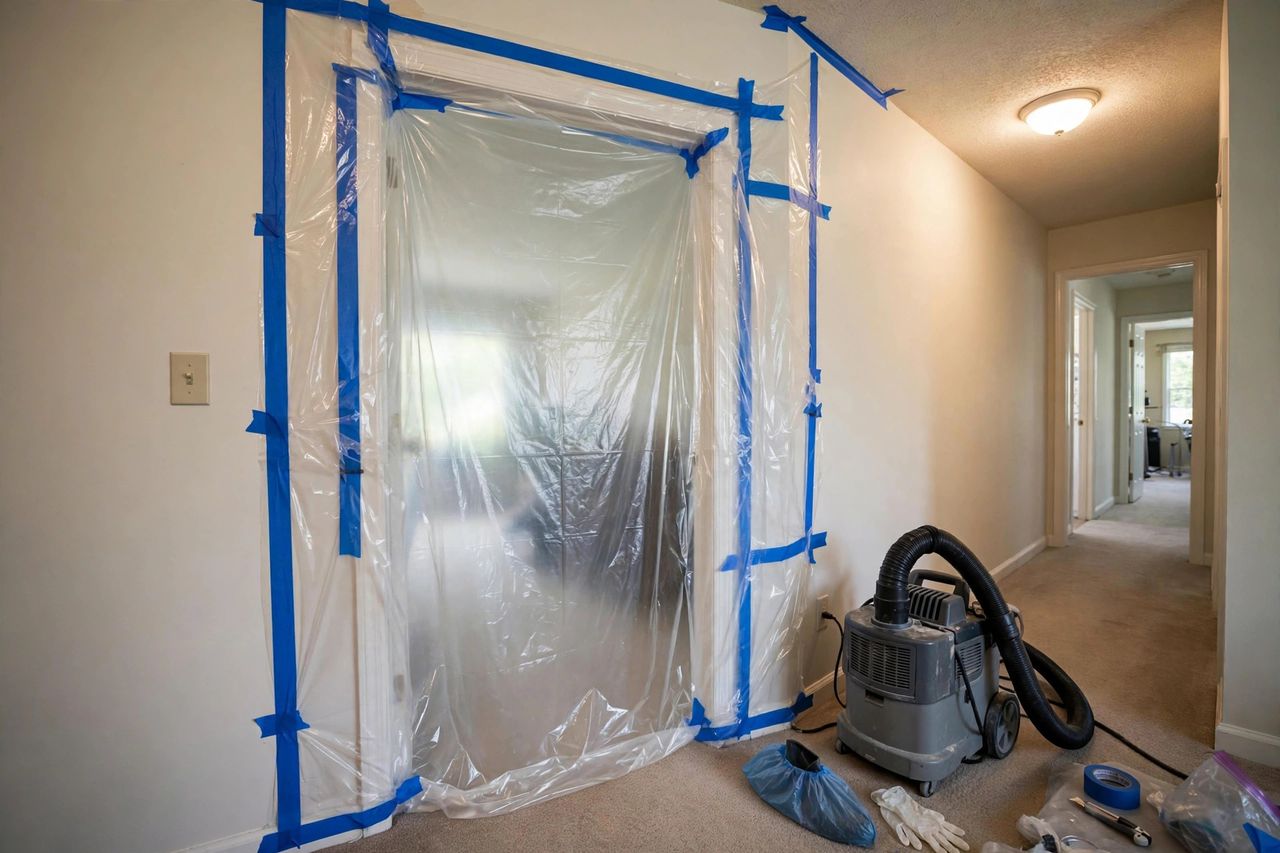
Control the affected area and reduce unnecessary exposure
Remove wastewater and contaminated materials where appropriate
Physically clean affected surfaces and contents that can be retained
Dry and monitor affected areas for remaining moisture
Address odor, microbial growth, repairs, and restoration needs
Materials that may be affected
Bathrooms concentrate the damage: tile grout, the toilet flange and wax ring area, subflooring around the toilet base, vanity cabinet bases (especially particleboard, which swells and crumbles), baseboards, and drywall behind the toilet. Bath mats, hampers, and anything stored on the bathroom floor are usually a loss. Tile itself can typically be disinfected and saved.
What to do before cleanup
- Keep occupants and pets out until it is cleaned during Toilet Overflow Cleanup work.
- Keep DIY disinfectant experiments out of the work area— mixing products can create toxic gases.
- Keep the HVAC from pushing air through the work zone— airborne droplets carry contamination to clean rooms.
- Keep a visual record of the damage— it helps scope the Toilet Overflow Cleanup work.
- Confirm the fixture or line is no longer backing up; a plumber, septic tech, or the utility may still be needed.
What not to assume
After Toilet Overflow Cleanup, deodorizing is not the same as decontaminating — a room can smell fine and still harbor contamination in porous materials. The call on each material weighs contamination level, porosity, and whether it can truly be cleaned — not just how it looks.
Schertz context
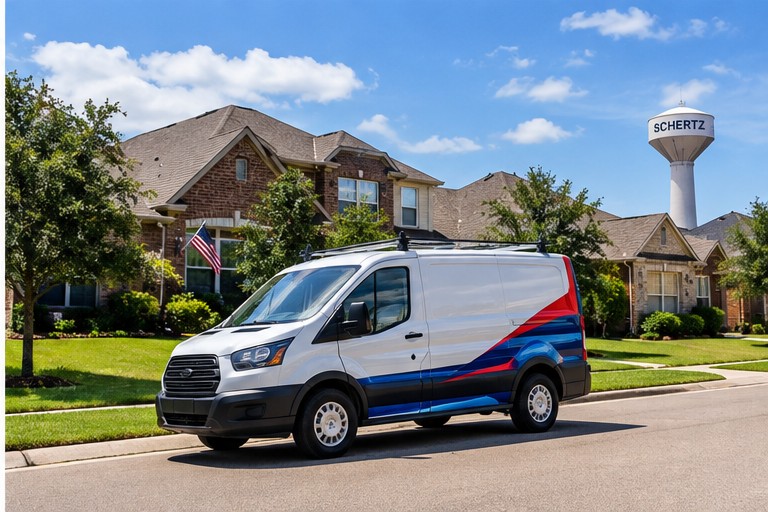
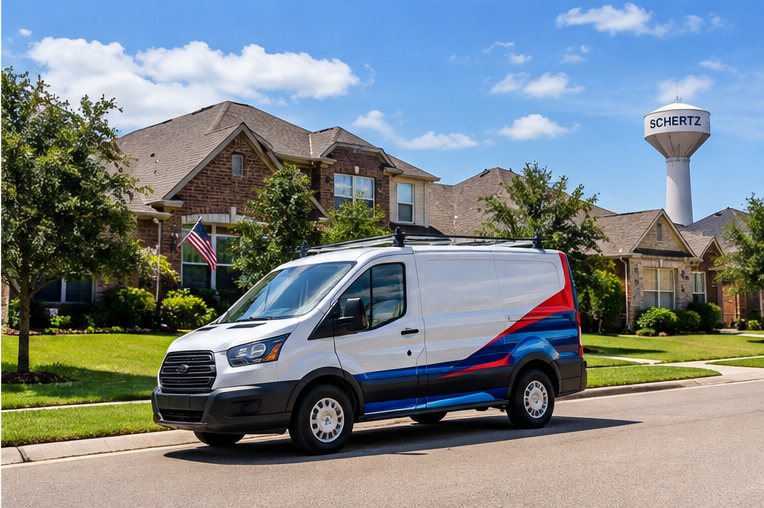
Toilet overflows in Schertz homes often come down to a clogged trap, a failing fill valve, or a partial main-line blockage pushing back to the lowest fixture. If plunging doesn't resolve it — or if other drains are slow too — the problem may be deeper in the sewer lateral, and the City of Schertz points to CCMA as the regional wastewater authority for public-line concerns.
Questions people ask about toilet overflow cleanup
What is toilet overflow cleanup?
Toilet overflow cleanup addresses contamination from a toilet that overflowed — and the right response depends on what overflowed, how far it traveled, how long surfaces stayed wet, and whether the water contacted porous materials. A bathroom floor can look clean while contamination or moisture remains around edges, cabinets, baseboards, or subflooring.
When is toilet overflow cleanup needed?
It is needed when the overflow carried waste (not just clean tank water), spread beyond the toilet base, seeped under flooring or into the subfloor, reached an adjoining room, or left persistent odor. Overflows that look minor on tile can be significant once water gets under fixtures, into grout, or down through the floor.
Can the visible water be the whole problem?
Usually not. Toilet water follows the path of least resistance: under the toilet base, beneath vanities, into grout lines, along baseboards, and down through penetrations in the floor. The visible puddle on the tile is often the smallest part of the affected area.
What should happen before deodorizing?
Stop the source, remove the water, clean residues from all contacted surfaces, and check for moisture around the toilet base, under fixtures, and in adjacent materials first. Bathrooms concentrate odor in small hidden spaces, so deodorizing before those are addressed just masks a source that is still present.
What if the backup appears to be a public sewer problem?
If the overflow was caused by a backup in the drain line rather than the toilet itself — especially if other fixtures are affected — the issue may extend beyond the property's plumbing. Contact the appropriate municipal or utility authority in addition to the cleanup; the City of Schertz identifies CCMA as the regional wastewater provider serving Schertz and nearby communities.